

About
A large marine habitat off the west coast of Australia required detailed monitoring to understand how environmental conditions were influencing vulnerable dugong populations and their seagrass feeding grounds. To support long‑term ecological management, Geospatial Intelligence was engaged to conduct an extensive remote sensing analysis using high‑volume UAV imagery. Over 70,000 aerial scenes were processed using advanced anomaly‑detection algorithms to automatically identify dugongs and assess changes across the broader marine ecosystem.
The Challenge
The marine environment and associated ecosystems face increasing pressures that threaten the stability of seagrass meadows and the dugong populations that depend on them.
The primary risks identified included:
-
CHANGING ENVIRONMENTAL CONDITIONS
Shifts in water quality, temperature, and clarity—driven by climate impacts—affect the health and distribution of seagrass, the primary food source of dugongs.
-
LOSS OF CRITICAL HABITATS
Environmental disturbances increase the vulnerability of marine species by disrupting migration pathways and degrading essential feeding and breeding areas.
-
LIMITED VISIBILITY OF MARINE POPULATIONS
Traditional monitoring methods are resource‑intensive and often struggle to track mobile or submerged species at scale, making it difficult to detect population shifts in time to intervene.
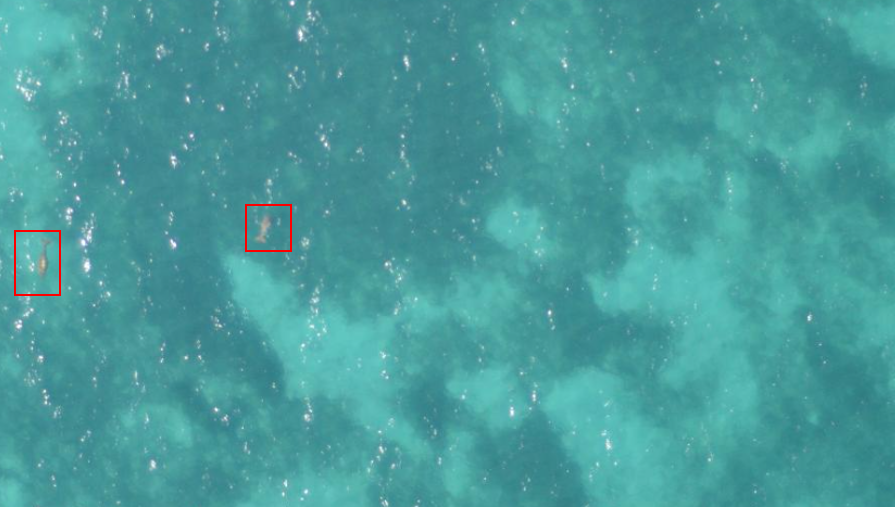
Through this research initiative, the study region gained access to state‑of‑the‑art remote sensing and automated detection technologies, significantly enhancing its ability to track dugong populations, monitor seagrass‑ecosystem health, and assess the ecological effects of climate pressures. Our findings now support ongoing marine planning, conservation efforts, and long‑term protection of vulnerable and migratory species.